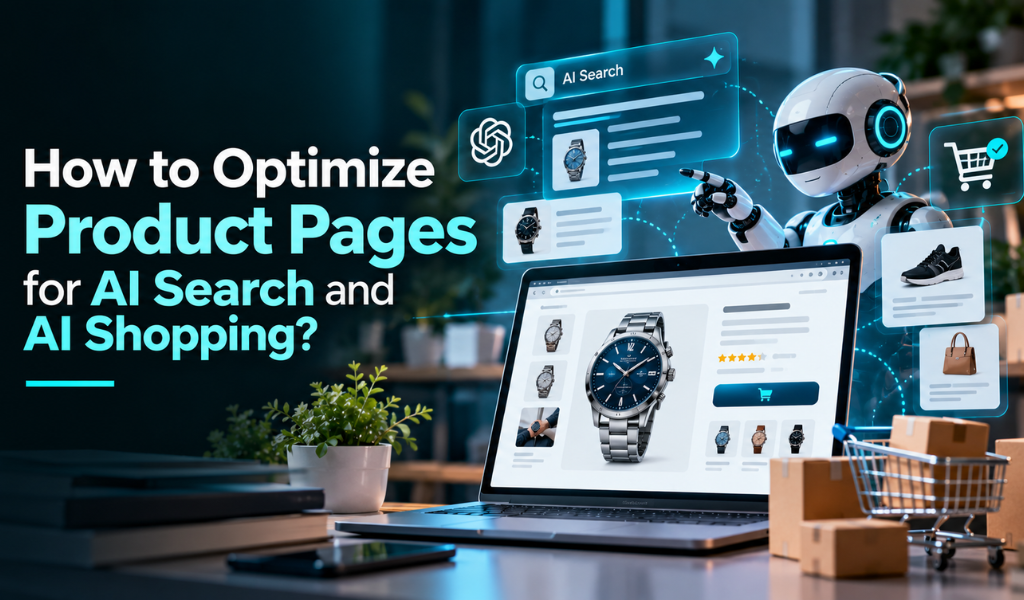
Search behavior is changing rapidly. Gone are the days when customers only relied on classic search results to discover products. Increasingly, they are using AI-powered tools to compare products, find recommendations, and make purchasing decisions. This makes AI ecommerce optimization an important component of a modern product-page strategy.
The objective for ecommerce businesses goes beyond simply ranking for keywords. Product pages should provide clear, useful, and trustworthy information that search engines and artificial intelligence systems can easily understand, interpret, and display to potential buyers.
Quick Summary
- Write clear product descriptions that answer common questions from customers.
- Use structured product information to help search engines identify important details.
- Optimize pages for conversational and voice search.
- Include accurate information about price, availability, specifications, and delivery.
- Earn trust through reviews, expert insight, and clear product information.
Why Does AI Ecommerce Optimisation Matters?
Traditional SEO is very much focused on rankings and clicks. AI search adds a new dimension: can your content be understood and selected as a useful answer?
AI ecommerce strategies help product pages communicate information in a way that is useful for shoppers and AI-powered search experiences. A well-optimized page should quickly describe what the product is, who it is suitable for, its key benefits, and how it compares with alternatives.
This can also help improve visibility throughout AI-generated answers, shopping recommendations, and conversational search journeys.
How to Optimize Product Pages for AI Search?
1. Create Clear, Helpful Product Descriptions
The new system is meant to be quicker and more responsive. Explain what the product does, why it is important, and what customer needs it solves.
Use short paragraphs, descriptive headings, and natural language questions. For example, rather than just listing the product’s dimensions, explain how those dimensions might affect usage.
This makes it easier for both customers and artificial intelligence systems to read its contents.
2. Answer Real Customer Questions
AI search often responds to conversational queries such as:
- Which product is suitable for small spaces?
- What are the main benefits of this product?
- Is this product suitable for beginners?
- How does this product compare with similar options?
Add useful answers to product pages where applicable. You can also add some additional context with a FAQ section that also helps with voice search and AI-generated responses.
3. Use Structured Product Information
Artificial intelligence systems need to understand products and therefore need reliable information. Maintain important details consistent and recognizable.
Include information such as:
- Product name and category
- Price and currency
- Availability
- Brand
- Specifications
- Sizes or variations
- Materials
- Shipping information
- Warranty details
- Customer ratings and reviews
Structured data can also help search engines better understand important product information.
Building Strong AI in Ecommerce Signals
AI in ecommerce is more than simply using artificial intelligence to automate tasks. It also alters the way businesses present information to customers and search systems.
Product pages must be accurate, transparent and relevant. Do not make exaggerated claims, use vague specifications, or provide obsolete information.
Trust can be built with real customer reviews, detailed specifications and useful buying advice. Include information about the business, product expertise and customer support where appropriate.
These components offer a richer experience for both users and AI-driven discovery systems.
Making AI Ecommerce Solutions Work for Product Pages
The point of good AI ecommerce solutions is to complement a strong SEO foundation, not replace it.
Understand the questions that customers ask at each stage of the buying journey. Then, create content that meets those needs.
For example a page selling clothes for ecommerce could talk about fit, fabric, sizing, care instructions and suitable occasions. A technology product page might describe compatibility, features, setup requirements and use cases.
This results in a more comprehensive source of information that artificial intelligence systems can evaluate, while also aiding customers in making informed decisions.
Optimize for AI Shopping and Conversational Search
Use Natural Language
Customers search using full questions rather than short keywords. Add language people actually use.
Keep Information Current
Incorrect prices, unavailable products and outdated specifications can all damage customer trust. Always review important product information on a regular basis.
Also read: How AI Shopping Is Changing E-commerce SEO And Google Ads?
Improve Internal Linking
Link product pages to appropriate categories, buying guides, comparison pages and FAQs This helps users find related information and gives search engines more context about your site.
Practical Product Page Optimisation Table
|
|
|
|
|
|
|
|
|
|
|
|
|
|
|
|
|
|
|
|
|
|
|
|
|
|
|
|
|
|
|
|
The Role of Artificial Intelligence in Ecommerce
AI is touching everything in ecommerce, from product discovery to personalization and customer support. But companies shouldn’t forget the basics.
A good website from a technical point of view, useful content, fast page experience, and accurate product information still matter.
The strongest AI-powered ecommerce strategy is a combination of these basics with content that is designed around customer intent. Don’t optimize for algorithms. Optimize for every product page to be useful.
Astral Digital Technologies enhances the organic visibility of ecommerce businesses by combining technical SEO, content optimization, and search-specific strategies tailored to changing customer behavior.
Conclusion
Optimizing product pages for AI ecommerce means making product information clear, trustworthy, comprehensive, and understandable. Conversational FAQs, product details, helpful descriptions, and accurate reviews can all play a part in increasing visibility across modern search experiences. Implementing effective ecommerce seo services can further help brands optimize product pages, improve search visibility, and connect with potential customers at different stages of their buying journey.
As AI search and shopping continue to develop, ecommerce brands that build useful, customer-centric product pages will be better positioned to attract qualified visitors and help them make purchasing decisions. A tactical approach to SEO can help turn these changes into sustainable organic growth.
FAQs on AI SEO for Ecommerce
1. How do I optimize a product page for AI search?
Use clear product descriptions, answer common customer questions, provide accurate specifications and keep pricing and availability information current.
2. What is AI ecommerce SEO?
AI ecommerce SEO is the process of optimising ecommerce content so that search engines and AI-powered search systems can understand, interpret and surface product information effectively.
3. How can I make my products more visible in AI shopping results?
Provide comprehensive product information, use appropriate structured data, maintain accurate product feeds and create helpful content that directly addresses customer needs.
4. Does structured data help ecommerce websites with AI search?
Structured data can help search engines understand important product attributes such as price, availability, ratings and specifications, supporting clearer interpretation of product information.