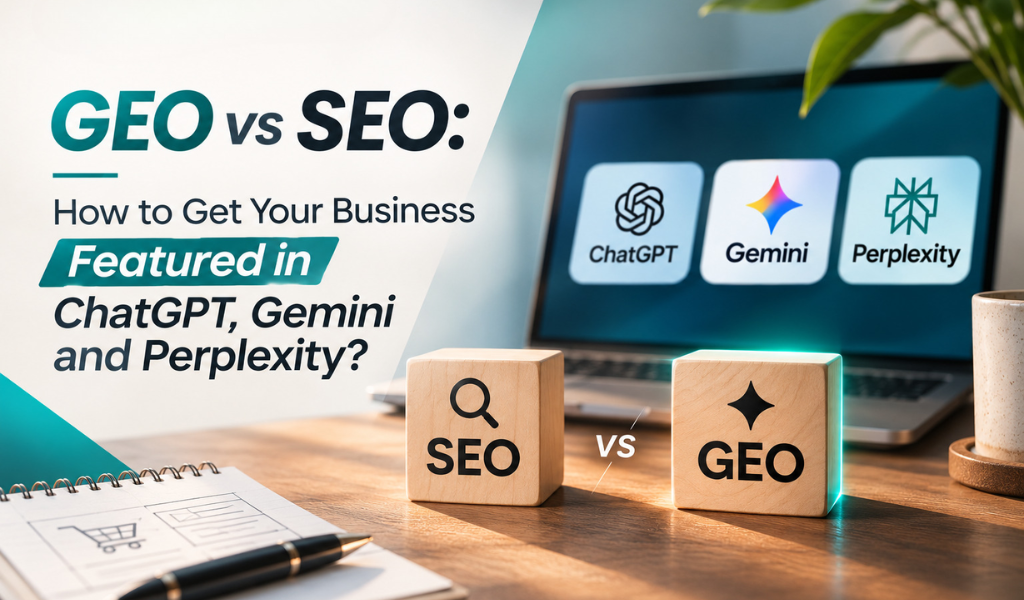
Search behaviour is changing fast. People don't just use Google to find products, services and businesses. More and more people are seeking out AI-powered platforms like Perplexity, Gemini and ChatGPT for recommendations, comparisons and answers. This is what makes generative engine optimisation an important aspect of modern digital marketing.
Traditional SEO focuses on getting websites to rank in search engine results, while GEO is about making business information discoverable, trustworthy, and useful enough to be referenced in AI-generated answers. Companies that understand both can improve their online presence and reach potential customers across multiple search platforms.
Quick Summary
- SEO improves website rankings in traditional search engine results.
- GEO helps businesses gain visibility in AI-generated answers.
- High-quality, well-structured, and trustworthy content supports both strategies.
- Brand mentions, authoritative sources, and relevant information can improve AI search visibility.
- Combining SEO and GEO creates more opportunities to attract qualified leads.
What Is the Difference Between GEO and SEO?
SEO and GEO share a common goal: helping people discover your business online. However, they approach visibility differently.
Search Engine Optimisation (SEO) is all about making your website rank better through the use of the correct keywords, improving the technical performance of your site, gaining more backlinks, better content, and improving user satisfaction.
Generative Engine Optimisation (GEO) aims to make it more likely your business is understood, mentioned, or recommended by AI-powered search platforms when they generate answers.
When a person searches Google for a digital marketing agency, they are presented with a list of websites. But asking ChatGPT for a reliable SEO agency might lead to a conversational answer with handpicked companies.
Both opportunities matter for long-term digital growth.
How Does Generative Engine Optimization Improve AI Search Visibility?
Generative engine optimization helps businesses make their content easier for AI platforms to understand, evaluate, and potentially reference.
Here are some important approaches:
1. Publish Helpful and Informative Content
Create content that directly answers customer questions. Include practical explanations, comparisons, industry insights, and relevant examples.
Avoid publishing generic articles simply to target keywords. Focus on providing information that genuinely helps readers make decisions.
2. Build Brand Authority and Trust
AI platforms may consider information from multiple sources when generating answers. Consistent brand information, expert contributions, genuine customer reviews, and relevant mentions across reputable websites can support credibility.
Follow Google's EEAT principles: Experience, Expertise, Authoritativeness and Trustworthiness.
3. Use Structured and Clear Information
Organise website content with descriptive headings, concise paragraphs, bullet points, tables, and relevant FAQs.
Implement appropriate structured data, such as Organisation, Service, Article, and FAQPage schema where eligible. This helps search engines interpret page information, although schema does not guarantee AI citations.
4. Strengthen Your Online Presence
Maintain consistent business details across your website, business profiles, and reputable industry directories.
Publish useful insights and earn relevant backlinks and brand mentions. These activities can strengthen your wider digital presence.
Generative AI SEO Strategies to Get Featured in ChatGPT, Gemini and Perplexity
Businesses need a practical approach to improve their chances of appearing in AI-generated responses.
Consider these generative AI SEO strategies:
- Target conversational queries: Include questions customers naturally ask, such as "Which SEO agency can help my business grow?"
- Create topic clusters: Publish connected articles around your main services to demonstrate subject knowledge.
- Add credible information: Support important claims with reliable data, original research, and expert insights.
- Optimise service pages: Clearly explain your services, benefits, processes, and target customers.
- Earn quality mentions: Build relationships with relevant publishers and industry websites.
- Monitor AI visibility: Test relevant prompts across ChatGPT, Gemini and Perplexity to understand whether your business appears in their responses.
Remember that AI-generated recommendations can vary by query, location, platform and time. No optimisation strategy guarantees inclusion.
GEO vs SEO: Which Strategy Should Your Business Prioritise?
The right approach is not to choose one over the other. Businesses should build a strong SEO foundation and expand their strategy to include AI search optimisation.
Why Consider Generative Engine Optimisation Services?
Managing SEO alongside emerging AI search requirements can be challenging, particularly for businesses with limited marketing resources.
By using professional generative engine optimisation services, businesses can identify content gaps, improve website structure, strengthen brand authority and develop an integrated search strategy.
Astral Digital Technologies helps businesses to boost their digital presence with SEO-centric strategies focused on search visibility, relevant traffic and business growth.
A good strategy should not only support traditional search performance but also future-proof your website for the evolving AI-driven discovery experiences.
Conclusion
Generative engine optimization is becoming an important consideration for businesses that want to remain visible as online search evolves. While SEO continues to drive organic rankings and website traffic, GEO creates additional opportunities to be discovered through AI-generated answers.
The best way is to mix quality content, technical SEO, brand authority, and AI search optimisation. If your business wants to boost its profile across Google and nascent AI platforms, look into crafting an integrated strategy with seasoned digital marketing pros.
FAQs on GEO vs SEO
1. What is generative engine optimization?
Generative engine optimization is the process of improving website content, brand authority, and online information so AI-powered platforms can understand and potentially reference a business in generated responses.
2. Is GEO replacing traditional SEO?
No. GEO is not replacing SEO. Both approaches complement each other. Traditional SEO supports search rankings, while GEO focuses on visibility within AI-generated answers.
3. How can I get my business featured in ChatGPT?
Publish useful content, maintain accurate business information, demonstrate industry expertise, and earn credible brand mentions. These practices can improve discoverability, although ChatGPT inclusion cannot be guaranteed.
4. How long does it take to see results from AI search optimisation?
There is no fixed timeline. Results depend on website authority, content quality, competition, online mentions, and how individual AI platforms retrieve and process information.